Author Archive

Introduction by the author

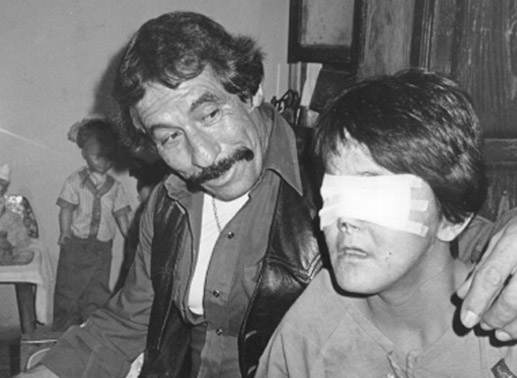
This book came about because of the kidnapping of an American newspaper photographer by a Juarez drug trafficker, a brutal and unprecedented event that caused an international scandal and brought about the downfall of one of the major drug traffickers of the time.

Until the kidnapping, I didn’t have much interest in the subject of drugs. Drug trafficking was part of the background noise of the El Paso-Juarez region where I worked as a reporter. It was low keyed even in its violence; it did not draw too much attention to itself. My journalistic work, which had begun for the El Paso Herald-Post in 1984, focused primarily on reporting on a political movement in northern Mexico that was challenging the entrenched one-party system that had ruled Mexico since 1929. Juarez, the largest city in the state of Chihuahua, was the scene of what today would be called a “color” revolution — a democratic movement that used tactics of non-violent resistance to achieve its goals. Such a revolution was unfolding only ten blocks south of the newspaper, just on the other side of the Rio Grande. Read more »

Mexican Cops Search for U.S. Citizen, Four Others Reported Missing in Jalisco

BREITBART–Authorities are searching for four men and a woman who went missing on their way to work this week in the Mexican state of Jalisco. One of the missing individuals is a U.S. citizen who was born in Arizona.

The case began this week when the Jalisco State Missing Persons Commission issued a series of bulletins announcing a search for Arizona-born Carlos David Valladolid Hernández, his sister Itzel Abigail Valladolid Hernández, and their coworkers Arturo Robles Corona, Carlos Benjamín García Cuevas, and Jesús Alfredo Salazar Ventura. Authorities have not labeled the case a kidnapping. Local news outlets in Mexico claim that the five individuals went missing in Zapopan and Tonala, two of the main municipalities of the Guadalajara metropolitan area.

[READ MORE]

Mexican journalist murdered in Acapulco —17th in 2018

(BREITBART) — A Mexican journalist in Acapulco, Guerrero, died in a hail of gunfire after a team of shooters chased him down. He was the 17th journalist killed this year.

This week, Gabriel Soriano Kuri, a radio journalist with Radio y Television de Guerrero, was riding in a company truck after covering a public event hosted by state officials when a team of gunmen chased him and a colleague. Paramedics rushed to the scene but the journalist died there shortly after. Law enforcement revealed the victim was struck twice by 9mm bullets while his colleagues were spared.

Ironically, at the public event, Guerrero Governor Hector Astudillo Flores praised his state’s “improvements” in public safety.

Despite government rhetoric, Guerrero continues to see record-setting levels of violence as rival cartels fight for control of the region’s drug production and distribution routes. Acapulco was previously considered a bustling tourist destination. However, the unending cartel violence significantly eroded international tourism.

Soriano’s murder comes less than a month after a team of gunmen shot and killed Sergio Martinez Gonzalez in the southern Mexican state of Chiapas. Martinez ran the online news outlet Enfoque and reported on threats received prior to his death.

[

At least 400K migrants crossed border into U.S. this year

(BREITBART) — U.S. Border Patrol agents apprehended nearly 400,000 migrants who illegally crossed the U.S.-Mexico border between ports of entry during Fiscal Year 2018. The number of migrants arrested represents a significant increase over the previous year’s total of 303,916.

U.S. Customs and Border Protection (CBP) officials reported on Tuesday afternoon that 396,579 migrants were apprehended during the fiscal year that ended on September 30. Of those, Border Patrol agents apprehended 107,212 Family Unit Aliens (FMUA) and 50,036 Unaccompanied Alien Children (UAC).

CBP officials previously stated that the numbers represent a “clear indicator that migration flows are responding to gaps in our nation’s legal framework.”

“Our nation faces a dangerous crisis on the border that threatens American communities,” DHS Spokeswoman Katie Waldman told Breitbart News in response to an inquiry about border migration numbers. “Congress refuses to close catch-and-release loopholes in the law that would allow authorities to detain and remove family units safely and expeditiously.”

The removal of actual family units, or those posing as family units, has been made virtually impossible by Congressional inaction – which will most likely result in record numbers of families arriving illegally in the United States this year,” Waldman stated.

[READ MORE]

Cartel war chaos: Tijuana murders top 2,000; US offers $10,000,000 for cartel boss ‘El Mencho’

(ZERO HEDGE) — by Tyler Durden

As a dangerous cartel war erupts in the Mexican border city of Tijuana, a total of 2,000 murders were reported by government officials in the first ten months of 2018, said Frontera.info, a local Mexican news agency.

As of Saturday, a total of 126 homicides were recorded for October, with the new total coming in at 2,005 killings for the year, as per the Attorney General’s Office of the State (PGJE) report.

“I believe that there is still a lack of coordination of the authorities of the three orders of the government; this coordination requires the political will and the main one must be the Governor of the State, that the corresponding work be done to have results also in the matter of homicides (translated in English via Google Translator),” said the head of the Citizen Council of Public Security of the State (CCSP), Juan Manuel Hernandez Niebla.

Niebla said the record number of homicides for the Tijuana region had caused citizens to seek shelter as the cartel drug war spirals out of control.

Tijuana homicides per month during 2018:

January – 191
February -177
March – 184
April – 212
May – 216
June – 221
July – 253
August 211
September – 214
October – 126 (as of Oct. 20th)

The Secretary of Municipal Public Safety, Marco Antonio Sotomayor Amezuca, reiterated that a spike in murders is due to a power struggle between two drug cartels: the Sinaloa cartel and the Jalisco Nueva Generacion.

“What has been happening in this time is the empowerment of a criminal group that has gained more strength; they began to hear the presence of a foreign cartel and even the authorities do not have much information, it was said that there was no presence and suddenly we realized that there was a presence, even before this administration (translated into English via Google Translator),” Amezuca explained.

Last week, the U.S. Government offered an unprecedented $10 million bounty for the leader of the Jalisco Nueva Generacion cartel.

Nemesio Ruben Oseguera Cervantes, 52, known as “El Mencho,” is a fugitive and labeled as a major “Kingpin” under the Foreign Narcotics Kingpin Designation Act by the U.S. Department of the Treasury in April 2015.

The cartel’s primary business is running methamphetamines into Los Angeles, New York, and Atlanta.

Experts have said, “El Mencho” is primarily the reason for the violent flare-up in Tijuana. Drug cartels have recently launched a cartel war for control of Tijuana because of its strategic importance of transporting drugs into the U.S.

In August, the U.S. Drug Enforcement Administration unveiled a few strategies to combat drug cartels with the Mexican government, military, and the federal police. These plans called for attacking cartels’ financial structure and the creation of a new enforcement program based in Chicago that monitors international investigations of cartels.

[READ MORE]

Netflix’s Narcos fourth season to introduce Ojinaga’s Pablo Acosta

(TVLINE)– After three seasons chronicling the rise and fall of Colombian drug lord Pablo Escobar and the aftermath of his demise, Netflix’s Narcos franchise is turning its attention to birth of the Mexican drug war.

The first full-length trailer for Narcos: Mexico sets the scene, taking viewers back to the year 1980 to witness the infancy of the Guadalajara Cartel, led by “the Rockefeller of marijuana” Félix Gallardo (Rogue One‘s Diego Luna). We’re also introduced to DEA agent Kiki Camarena (Gracepoint‘s Michael Peña), who moves his family from California to Guadalajara. Little does he know that his latest assignment will be his toughest challenge yet, as “a tragic chain of events unfold, affecting the drug trade and the war against it for years to come,” according to the official logline.

The fourth season will also bring to the screen Ojinaga’s Pablo Acosta, played by Geraldo Taracena (Apocalypto).

Narcos launched in August 2015. After its first two seasons focused exclusively on cocaine kingpin Escobar, Season 3 turned its attention to the rise of the Cali Cartel after his death. Originally set to return for Season 4, the series has instead come back as Narcos: Mexico, which Netflix is billing as Season 1 of a new spinoff series.

The complete 10-episode season is set to release on Friday, Nov. 16.

[READ MORE]

‘A smell of death’: Mexico’s truck of corpses highlights drug war crisis

(THE GUARDIAN) — by David Agren

The news that authorities used a truck trailer to store 273 corpses offers a symbol for a crisis in Mexico that affords no dignity to its victims.

The first sign something was amiss came when the 18-wheeler lumbered into the dilapidated neighborhood of Paseos del Valle on the outskirts of Guadalajara.

The truck itself was unremarkable – a white tractor unit pulling a refrigerated trailer emblazoned with a polar bear logo – but it came with a police escort. And as the massive vehicle pulled on to a muddy track between the last row of houses and a corn field, dogs across the neighborhood began to bark wildly at the stench it released.

“It was a smell of death,” recalled Alejandro Espinosa, a hospital maintenance worker who lives nearby.
The truck was discovered by the public in the dilapidated neighborhood of Paseos del Valle on the outskirts of Guadalajara.

A crowd quickly gathered, and when the truck became stuck in the mud, several youths pushed past the police and forced open the trailer doors.

Inside were scores of human bodies, wrapped in garbage bags, bound with duct tape and piled haphazardly on top of each other.

Local authorities eventually confirmed that 273 corpses had been dumped in the trailer after the relentless pace of violent crime left the local morgue without any space for new arrivals. For nearly two weeks, the truck had been drifting around the suburban hinterland of Mexico’s second city.

As the scandal escalated, Jalisco officials were forced to admit that they had been using stationary trailers to store bodies for at least two years.

The macabre discovery came on the country’s national holiday, and seemed to offer a damning comment on the state of the nation: in the 12 years since Mexico launched its militarized war on drugs, more than 200,000 people have died and another 35,000 gone missing.

[READ MORE]

U.S. offers $10m reward for Mexican drug kingpin

(BREITBART) — By Robert Arce

U.S. Attorney General Jeff Sessions announced the State Department doubled the reward for the capture of Mexican drug kingpin Nemesio Oseguera Cervantes aka “El Mencho” to $10 million. “El Mencho,” is the alleged leader of the Cartel Jalisco Nueva Generacion (CJNG) – one of the largest, most dangerous organizations currently operating in Mexico with a heavy presence in the United States.

The U.S. government, through the Departments of Justice, Treasury, and State, announced a series of measures to target and dismantle the CJNG this week. Those include the doubling of the reward and the unsealing of 15 indictments.

CJNG is one of the most powerful cartels in Mexico and the Department of Justice considers it to be one of the five most dangerous transnational criminal organizations in the world — responsible for trafficking tons of cocaine, methamphetamine, and fentanyl-laced heroin into the United States.

The Cartel Jalisco Nueva Generacion was founded in 2011 and is growing in size and strength rapidly. Today, the DEA estimates the CJNG exerts influence in 23 of 31 Mexican states, including key drug production and transportation corridors. The organization’s disciplined command and control, sophisticated money laundering techniques, efficient drug transportation routes, and extreme violence make it a force to be reckoned with. The cartel expanded globally into Europe, Asia, and Australia as well.

[READ MORE]

In a small town in Michoacan, the people give the orders and the government obeys

(INTERNATIONAL MAN) — by Jeff Thomas

The sign above is located in the state of Chiapas in Mexico. In English, it says, “You are in the territory of Zapatista in Rebellion. Here, the people give the orders and the government obeys.”

Well, of course, what that really means is that the Zapatistas give the orders, not the people as a whole. Still, the people generally regard the Zapatistas as being more representative of their wishes (and less parasitical) than the government.

Mexicans are further along than, say, Europeans or Americans in understanding the true role of government. The mask has been off for some time and the people understand that the government does not exist to serve them; it exists to enslave them – that is, to rob them of the fruits of their labour through taxation, whilst doing as little as possible to benefit them.

They understand that this is the norm for all governments and elections do little more than remove one parasite and replace it with another.

The Zapatistas have been more successful than they would have been, had they been operating in, say, the US. This is partly due to the fact that the Federal government in Mexico is not as well-funded as in the US and is therefore not as powerful. This, in addition to the contempt in which the Federales are held by Mexicans in general, particularly the campesinos – the poor, assures greater success for the Zapatistas. Since 1994, their strength and breadth have grown steadily.

At present, they dominate Guerrero, Oaxaca and Chiapas states, shown below in purple. But, recently, it is in Michoacán (the easternmost yellow state) that the most interesting development has occurred.

The people of the town of Cherán became fed up with the struggle as to who rules over them and decided to take charge of their town themselves. In 2011, led by local women (including one granny), the population of 20,000 removed the bureaucrats, the police, the talamontes (the local mafia) and the rebels, and are now running their town themselves with volunteer citizens.

They’re not professing to be libertarian and yet, through common sense, they’ve established a form of rule that is remarkably libertarian.

The basic principle is that they make no laws. The citizens may do whatever they wish, as long as they do not aggress against other citizens or their property. Political parties have been banned.

Like a mediaeval European town, the three entrance roads are guarded by a militia, who stop anyone seeking to re-establish dominance over the town.

Pedro Chavez, a teacher and community leader commented, “To defend ourselves, we had to change the whole system — out with the political parties, out with City Hall, out with the police and everything. We had to organize our own way of living to survive.”

Not surprisingly, the takeover became a national issue. There was massive political opposition in Mexico City. But, in 2014, Cherán’s provisional self-government was declared legal. The town remains part of Mexico but is self-determining.

Of course, we’re forever being told by the academics of the world that the result of a libertarian system would be chaos, as there’s no powerful government to constrain people from their natural lawless tendencies.

So, what we have here is a litmus test to view a libertarian community in a Petri dish.

What do we see?

To begin, crime is down dramatically. With organized crime removed, along with the police whom the gangsters paid off, capital crime in particular, has ceased to exist. (Most remaining crime has to do with alcohol abuse.)

So, other than the determination of a few inspired women who were fed up with violence and corruption, what are the keys here? How could this come about?

Well, unlike the northern Mexican states, where most of the manufacturing takes place, most all people in Cherán are campesinos – they lead simple lives, primarily as farmers. The misguided belief that the government or any other ruler is somehow making their lives better through entitlements, does not exist.

Secondly, this is a small community. The townspeople all know each other well enough that it was possible to organise quietly and plan a takeover in secret.

Although some of the younger men in the community wanted to execute the captured talamontes, police and bureaucrats immediately after the takeover, the women who had led the uprising wisely insisted that the violence must end and the captors simply be expelled, never to be allowed to return.

Thus, the reborn community began on the most central of libertarian principles and that principle has continued to be maintained.

In the sophisticated western world, we frequently debate the likelihood of the success of a libertarian community – that its simple principles are too idealistic to ever work.

However, seven years after the takeover of their town, by the people of Cherán, we see that this is not only possible, it can be accomplished by such an unlikely group as a handful of poor women, without any funding – with just the simple idea of liberty.

In reflection, it’s important that we recognise that the Mexican government is underfunded and in disarray. Although it does all it can to dominate all its states, it’s very limited as to how much it can actually maintain in the way of controls. This is particularly true in the southern Mexican states.

And of course, there’s the “alternate government” – the Zapatistas, whose objective is to replace the government with themselves as the dictators. However, they’ve taken as their theme, “The People Give the Orders and the Government Obeys.”

In doing so, they’ve provided the inspiration that it might just be possible to toss off the domination of all would-be rulers and become self-determining.

This is essentially the same story as the US in 1776.

Most revolutions (the Russian Revolution, the French Revolution, etc.) are led by those who simply wish to replace the previous autocrats. However, revolutions that are led by the people themselves, for the purpose of liberty, have the potential to thrive.

The US, in its infancy, was libertarian in nature. It was intended to be a republic, not a democracy and, although it got off to a wonderful start, it slowly degraded into a corporatist/collectivist oligarchy.

Cherán stands as a reminder that liberty does not end, it simply moves around geographically from time to time.

There is always liberty somewhere in the world.

[READ MORE]
Mexican riot cops deployed for caravan showdown after Trump snaps fingers

(ZERO HEDGE) — by Tyler Durden

Mexico deployed hundreds of riot police on Thursday to intercept a caravan of more than 4,000 Central American migrants, following demands by President Trump that Mexio, Honduras, Guatemala and El Salvador intervene before he has to deploy US troops.

MIGRANT CARAVAN: Two federal police-filled planes w/anti-riot gear landed near the Mexico/Guatemala border this morn (vid source: Policia Federal de Mexico). pic.twitter.com/UyneeXlPnu
— KarlaZabs (@karlazabs) October 17, 2018

“I must, in the strongest of terms, ask Mexico to stop this onslaught – and if unable to do so I will call up the U.S. Military and CLOSE OUR SOUTHERN BORDER!” Trump Tweeted Thursday morning.

I am watching the Democrat Party led (because they want Open Borders and existing weak laws) assault on our country by Guatemala, Honduras and El Salvador, whose leaders are doing little to stop this large flow of people, INCLUDING MANY CRIMINALS, from entering Mexico to U.S…..
— Donald J. Trump (@realDonaldTrump) October 18, 2018

….In addition to stopping all payments to these countries, which seem to have almost no control over their population, I must, in the strongest of terms, ask Mexico to stop this onslaught – and if unable to do so I will call up the U.S. Military and CLOSE OUR SOUTHERN BORDER!..
— Donald J. Trump (@realDonaldTrump) October 18, 2018

….The assault on our country at our Southern Border, including the Criminal elements and DRUGS pouring in, is far more important to me, as President, than Trade or the USMCA. Hopefully Mexico will stop this onslaught at their Northern Border. All Democrats fault for weak laws!
— Donald J. Trump (@realDonaldTrump) October 18, 2018

On Tuesday, Trump threatened to cut off aid to Guatemala, Honduras and El Salvador if they “allow their citizens, or others, to journey through their borders and up to the United States.”

We have today informed the countries of Honduras, Guatemala and El Salvador that if they allow their citizens, or others, to journey through their borders and up to the United States, with the intention of entering our country illegally, all payments made to them will STOP (END)!
— Donald J. Trump (@realDonaldTrump) October 17, 2018

Mexico said in a Thursday statement that it would also seek assistance from the United Nations refugee agency for help coordinating with Central American governments of countries from which the migrants originated.

Honduran riot police were deployed to the Guatemala border to stop more people joining a caravan of migrants and asylum seekers. They are headed to the U.S.-Mexico border to escape inequality and violence in Honduras, where 66% of people live in poverty. pic.twitter.com/cleR2movqs
— AJ+ (@ajplus) October 17, 2018

Hundreds of federal police in riot gear fanned out on the international bridge in Suchiate, on the Mexican-Guatemalan border, as the caravan of several thousand Honduran migrants trekked toward the crossing.

Guatemala also sent police reinforcements to its side of the border, after Trump threatened to cut aid to the region, deploy the military and close the US-Mexican border if the migrants were allowed to continue.

A first group of several hundred migrants arrived late Wednesday in the border town of Tecun Uman, Guatemala, where they overflowed a local shelter, leaving many to sleep in the town square or on the street, an AFP correspondent said. -AFP

The new caravan, which began in the Honduran city of San Pedro Sula with 150 migrants, is the second caravan from Honduras this year. The first caravan was largely disbanded, though a few asylum seekers successfully made it to US soil and were taken into custody.

[READ MORE]